Steel vs. Aluminum Garage Doors: Which Is Better for Las Vegas Heat? [2025]
For most Las Vegas homeowners, insulated steel garage doors are the better choice for year-round heat resistance, energy efficiency, and durability. Aluminum doors still shine for lightweight operation and modern glass-heavy designs, but they can’t match steel’s thermal performance on attached garages in triple-digit desert heat.
Quick Summary
- Best overall for Las Vegas heat: Insulated steel garage doors (especially double-layer or polyurethane-core models).
- Best for modern, glass-heavy looks: Aluminum and glass doors on detached or rarely cooled garages.
- Steel wins on: Insulation, impact resistance, lifespan, and security.
- Aluminum wins on: Weight, corrosion resistance, and contemporary curb appeal.
- Rule of thumb: If your garage shares a wall with living space or has an AC vent, choose steel. If it’s detached or used mostly for storage, aluminum can be a smart, stylish option.

Direct Answer: Steel vs Aluminum for Las Vegas Heat
In Las Vegas, where summer highs routinely push past 100 °F, steel garage doors generally outperform aluminum for homes that are:
- Attached to the house
- Air-conditioned or semi-conditioned (laundry room, home gym, workshop)
- Exposed to strong west- or south-facing sun
Steel doors are denser and typically offer higher R-values when insulated, which slows heat transfer and reduces the amount of cooled air lost through the garage envelope. Aluminum doors, while naturally corrosion-resistant and lightweight, have thinner skins and transfer heat more easily, so they’re better for:
- Detached garages
- Modern townhomes where style outweighs energy loss
- Light-duty use where quiet operation and light weight are priorities
Steel vs Aluminum Garage Doors in Las Vegas (2025 Comparison)
| Feature | Steel Garage Doors | Aluminum Garage Doors |
|---|---|---|
| Average Installed Cost (Clark County) | $1,200 – $2,800 (insulated) | $1,000 – $2,400 (often non-insulated) |
| Weight | Heavier (≈120–200 lbs) | Lighter (≈60–100 lbs) |
| Typical Insulation R-Value Range | R-6 – R-18 (polyurethane or polystyrene cores) | R-4 – R-12 (insulated aluminum frames/panels) |
| Performance in Extreme Heat | Excellent – less thermal warping, better rigidity | Moderate – more expansion & panel flex in peak heat |
| Maintenance Needs | Wash quarterly; inspect and touch up paint/seal yearly to prevent rust | Clean tracks and glass 2x per year; check for frame alignment and loose fasteners |
| Durability / Lifespan | ≈20–25 years with proper maintenance | ≈15–20 years on average |
| Style Options | Raised-panel, carriage-house, faux-wood, traditional ranch | Modern, slim-frame, brushed aluminum, frosted or clear glass panels |
| Environmental Impact | Higher energy efficiency, especially on attached garages | Fully recyclable, lightweight to transport and operate |
| Best Use Case in Las Vegas | Extreme sun exposure, wind, and insulation priority | Contemporary curb appeal on detached or lightly used garages |
How Each Material Handles Las Vegas Heat
Las Vegas regularly hits triple-digit highs in summer, and long-term climate normals show July is typically the hottest month of the year.
In these conditions, material choice directly affects comfort, energy bills, and door reliability.
Steel in Extreme Desert Heat
- Better structural integrity: Steel’s rigidity helps panels resist warping and misalignment even when the door faces intense afternoon sun.
- Improved thermal resistance: Double- or triple-layer steel doors with polyurethane cores slow down heat transfer, helping keep attached garages closer to indoor temperatures.
- Quieter, more solid feel: Heavier, insulated steel doors tend to operate more quietly and feel more substantial when opening and closing.
Aluminum in Extreme Desert Heat
- More expansion and flex: Aluminum expands more noticeably under intense heat, which can lead to minor panel flexing or light track binding if the system isn’t installed and maintained perfectly.
- Fast heat transfer: Thin aluminum skins transmit exterior heat quickly, and uninsulated models allow cooled air to leak out of attached garages.
- Reflective but thin: While aluminum can reflect sunlight when finished in light colors, its low mass limits its ability to resist heat flow compared to insulated steel.
Takeaway: For garages that share walls, ceilings, or doors with conditioned living space, a well-insulated steel door can maintain a more stable temperature in the garage—often improving cooling performance by an estimated 20–30% compared to a similar non-insulated aluminum door.
Durability & Maintenance in Las Vegas Conditions
Las Vegas brings more than just heat. Your garage door also has to handle dust, monsoon winds, and very hard municipal water that can leave mineral spots on finishes.
Steel Garage Doors
Pros:
- Excellent impact resistance: Steel stands up better to bumps from vehicles, toys, and windblown debris.
- Strong finishes: Galvanized and powder-coated steel resist UV damage when washed regularly.
- Longer lifespan: With yearly tune-ups, steel doors commonly reach 20–25 years of service life.
Cons (and how to offset them):
- Surface rust risk: Dust and hard-water residue can slowly compromise bare edges or chips in the finish.
- Maintenance tip: Rinse the door quarterly, especially the bottom panel and track area, and touch up any nicks in the paint annually.
Aluminum Garage Doors
Pros:
- Rust-proof construction: Aluminum doesn’t rust, making it a good fit for owners coming from coastal areas or for glass-heavy modern designs.
- Lighter loads on hardware: Less weight can reduce wear on springs, rollers, and openers over time.
Cons (and how to offset them):
- Dent-prone: Aluminum panels dent more easily from bikes, balls, or hail, and those dents are harder to disguise.
- Potential frame distortion: High winds or repeated impacts can slowly tweak frames or glazing channels.
- Maintenance tip: Schedule a professional tune-up annually to check alignment, tighten fasteners, and lubricate rollers and hinges.
Takeaway: Choose steel if you value long-term robustness and don’t mind basic yearly maintenance. Choose aluminum if lightweight operation is more important than dent resistance.
Which Looks Better on Modern Las Vegas Homes?
In many newer communities across Summerlin, Inspirada, and Anthem, the garage door is a major part of your front elevation. Material choice makes a big difference in curb appeal.
Aluminum for Modern & Luxury Designs
- Slim frames & big glass: Aluminum’s strength-to-weight ratio allows for larger spans of glass, giving a clean, modern, “showroom” look.
- Frosted and tinted glass: Popular in upscale builds where homeowners want privacy but still want natural light in the garage.
- Contemporary profiles: Works especially well on boxy, flat-roof, and desert-modern elevations.
Steel for Classic & Transitional Homes
- Embossed panels: Raised, recessed, and carriage-house designs pair well with ranch, Mediterranean, and stucco-heavy homes across Henderson and North Las Vegas.
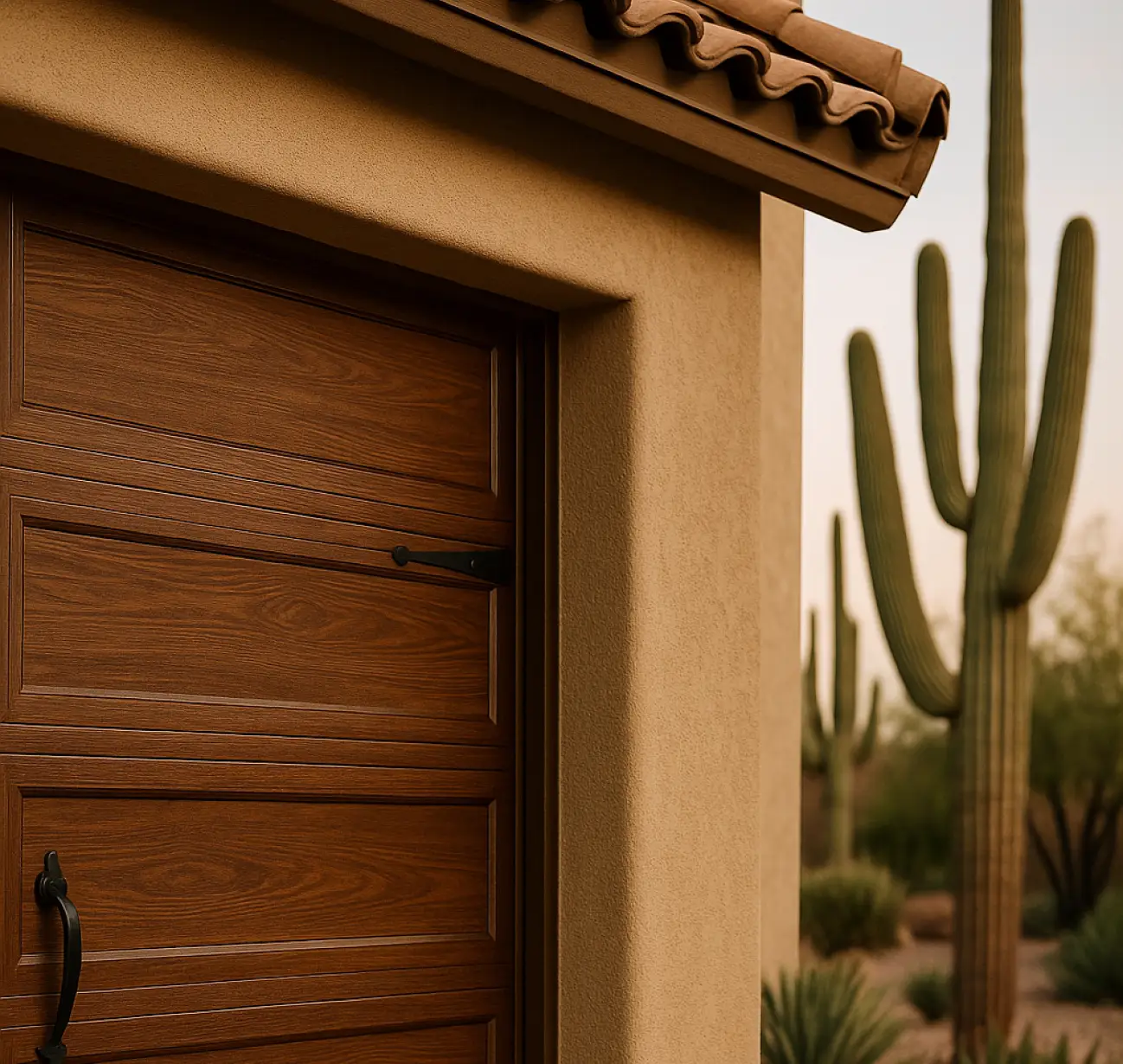
- Wood-look finishes: Faux-woodgrain steel offers the warm look of wood without the maintenance headaches.
Many factory-applied finishes on both steel and aluminum are rated to resist noticeable UV fade for around a decade when cleaned and maintained according to manufacturer instructions and industry guidance from groups like the International Door Association.
Takeaway: For a modern, glass-forward façade, aluminum wins. For traditional or transitional homes, steel’s embossed and carriage-style options generally look more at home.
Cost & Energy Efficiency (2025 Data)
National cost guides show that a typical new garage door installation in 2025 runs in the low-to-mid four figures, with higher-end, insulated or custom materials pushing into the upper ranges.
In the Las Vegas Valley, labor and permitting requirements through Clark County can also influence your final price.
Typical Installed Costs
- Steel doors: About $1,200–$2,800 installed for standard insulated residential doors, depending on size, style, and insulation level.
- Aluminum doors: About $1,000–$2,400 installed for basic aluminum and glass models, with designer or full-view options costing more.
Energy & Mechanical Trade-Offs
- Steel energy savings: Higher R-value insulated steel doors can improve the thermal performance of attached garages, which may reduce cooling loads by roughly 5–8% annually in some homes when the garage shares conditioned walls.
- Aluminum mechanical savings: Lighter doors put less strain on your opener and springs, potentially reducing mechanical repair costs over a 15–20 year span.
Takeaway: If your garage is part of your home’s conditioned shell (or you plan to convert it into living space), the long-term energy savings from steel usually outweigh its higher upfront cost. For a detached, mostly unconditioned garage, aluminum often delivers better value.
Common Las Vegas Use-Case Scenarios
1. Energy-Conscious Homeowner in Summerlin
Goal: Lower cooling bills and keep the home’s primary entry (often the garage-to-kitchen door) more comfortable.
Best fit: Insulated steel door with at least R-15 rating, high-quality perimeter weatherstripping, and a properly sealed threshold.
2. Modern Townhome in Anthem or Inspirada
Goal: Match architectural style and maximize light in a small garage space.
Best fit: Aluminum and glass combo door with frosted or tinted glass for privacy, plus a belt-drive opener for quiet operation.
3. Rental Property in North Las Vegas
Goal: Durability and low hassle between tenants.
Best fit: Galvanized steel with a textured finish to hide minor dings, standard raised panels, and basic insulation for comfort and noise control.
4. Homeowner Moving from the Coast to Las Vegas
Goal: Familiar, corrosion-resistant look with good performance in a dry climate.
Best fit: Aluminum can still be a good fit, especially on detached garages, but consider upgrading to insulated frames and panels if the garage ties into conditioned space.
Summary Decision Framework
Choose Steel If…
- You prioritize heat insulation and structural strength.
- Your garage is attached to living space or has AC/heat.
- You plan to own the home for 15+ years.
- You want a quiet, solid-feeling door in wind.
- You prefer traditional or carriage-house styling.
Choose Aluminum If…
- You want a lightweight, modern look with large glass panels.
- Your garage is detached or used mainly for storage.
- You value lower initial cost and easy manual operation.
- You’re comfortable trading some insulation for design flexibility.
Final Verdict: What Desert Door Network Recommends
For Las Vegas’s intense heat, dust, and dry air, insulated steel garage doors remain the best all-around choice for most homeowners. They offer:
- Stronger thermal performance on attached garages
- Better impact resistance and security
- Longer service life—often 5–10 years more than comparable aluminum doors
Aluminum doors still have a clear role: they deliver unbeatable modern aesthetics, corrosion resistance, and lightweight operation, especially when you’re prioritizing curb appeal on a detached or showcase-style garage.
Bottom line:
- Steel = Performance & Efficiency.
- Aluminum = Style & Lightweight Ease.
Both materials can thrive in Las Vegas when properly installed and maintained. But if you’re playing the long game on comfort, energy performance, and durability in the desert, steel wins by a comfortable margin.
References & Further Reading
NOAA National Centers for Environmental Information – U.S. Climate Normals (Las Vegas area)
HomeAdvisor – Garage Door Replacement Cost Guide (2025)
Energy.gov – Insulation & R-Values (Energy Saver)
International Door Association – Consumer & Industry Resources
Clark County, NV – Building & Fire Prevention Codes & Guidelines