
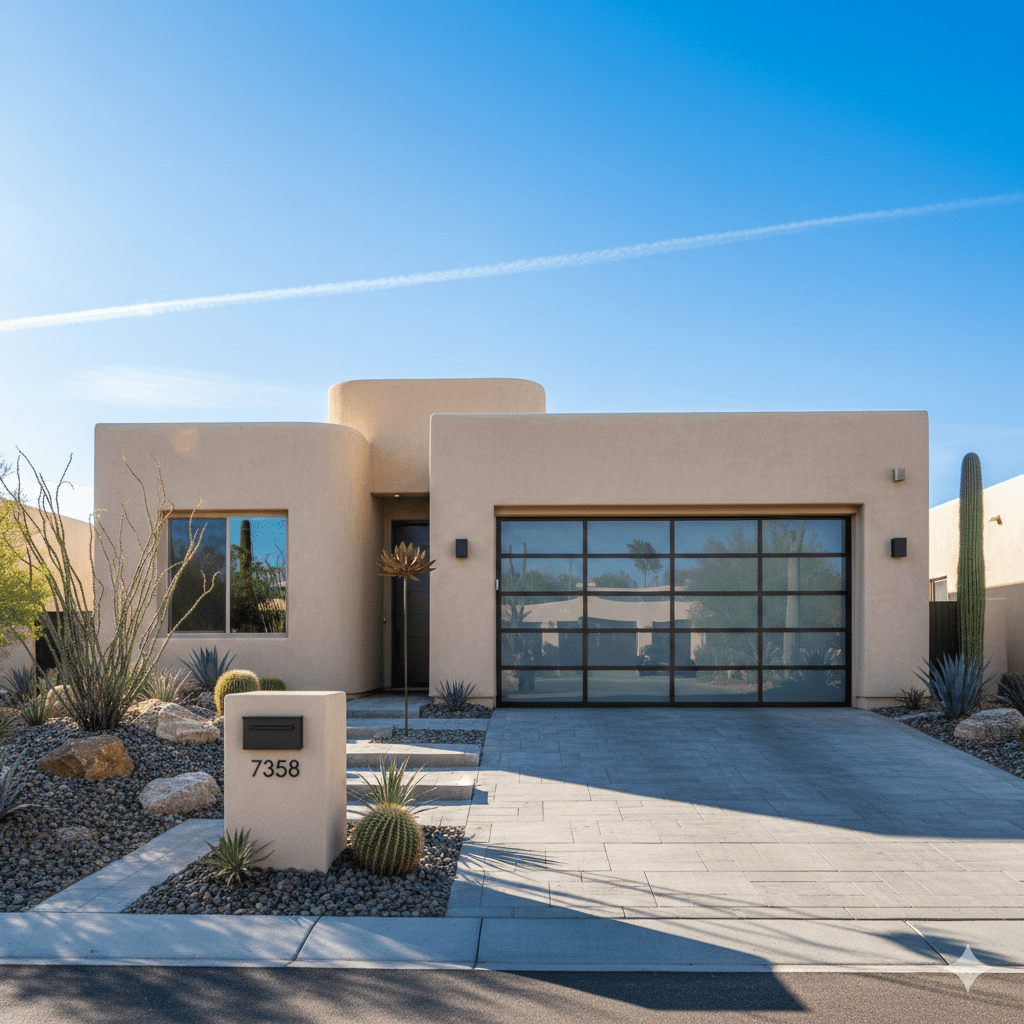
Glass Garage Doors in the Vegas Desert: Pros and Cons for Las Vegas Homeowners
Updated: January 26, 2026
Short answer (first 50–75 words): Glass (full‑view) garage doors can work in Las Vegas if you choose desert‑ready products — insulated frames, double‑pane or Low‑E glazing, and professional installation — but they will usually pass more solar heat into the garage than a solid insulated steel door, so they are not the best choice if you plan to use the garage as a fully climate‑controlled living area. clopaydoor.com
Short answer — are glass garage doors practical in Las Vegas?
Yes — with caveats. Use high‑performance glazing, thermally broken frames, and professional installation. If the garage is a conditioned living or work space, a solid insulated door usually outperforms glass for energy control.
Why homeowners choose glass garage doors (Pros)
Curb appeal and modern style
Claim: Full‑view glass doors deliver a clean, high‑end look that modernizes facades.
Evidence: Manufacturers and local installers market aluminum full‑view and glass doors as signature modern upgrades for neighborhoods such as Summerlin and other upscale builds. See local examples at garagedoorrepairlasvegas.co.
Implication: If curb appeal and a contemporary aesthetic matter (for resale or design coherence), glass doors are a strong visual investment.
Daylight, visibility, and indoor–outdoor flow
Claim: Glass panels flood garages and adjacent living spaces with natural light and create an indoor–outdoor feel popular in restaurant patios and modern homes.
Evidence: Full‑view doors are used commercially and residentially to open rooms to patios and shopfronts; manufacturers offer clear, frosted, and polycarbonate glazing. See product options at clopaydoor.com.
Implication: For car spaces, studios, workshops, or homes with connected patios, glass doors enhance usability and lifestyle.
Custom privacy and finish options (frosting, tint, frames)
Claim: Frosting, tinting, mirrored glass, and opaque panels deliver privacy without losing the full‑view aesthetic.
Evidence: Clopay and other makers list Low‑E, frosted, tinted, and polycarbonate glazing options. See clopaydoor.com.
Implication: You can get the look without full transparency — choose finishes to match privacy needs.
Key concerns for the Vegas desert (Cons)
Heat transfer and energy performance
Claim: Glass garage doors generally transmit more heat than insulated solid doors and will raise cooling loads for adjacent conditioned spaces.
Evidence: NFRC‑listed glass doors show higher U‑factors (example product U ≈ 0.74). By contrast, typical insulated garage doors and industry targets are significantly lower; code guidance and industry examples show target U‑factors around 0.31–0.34 for glazed garage doors. See NFRC product entries at search.nfrc.org and DASMA guidance at dasma.com.
Implication: If your garage is unconditioned and only used for parking, a glass door with proper glazing will usually be acceptable. If you use the garage as a conditioned workshop, living space, or for an adjacent room where heat control matters, a glass door — even insulated — will typically allow more solar heat gain than a solid, high‑R door.
Privacy and glare
Claim: Clear glass increases glare, sightlines, and exposure to UV that can fade stored items.
Evidence: Manufacturers offer Low‑E coatings and tinted options to reduce visible transmittance and SHGC. See clopaydoor.com.
Implication: Pick Low‑E and tinted solutions where UV or glare are concerns; frosted glass is a common compromise.
Maintenance in a dusty, sunny climate
Claim: Desert dust and hard sunlight raise cleaning frequency and accelerate seal and frame wear if not maintained.
Evidence: Las Vegas’s dry, dusty climate and abundant sunshine increase dirt accumulation and UV stress on seals and finishes. See local climate context at en.wikipedia.org.
Implication: Expect semi‑annual or quarterly exterior glass cleaning and annual seal inspection; factor maintenance time and cost into the ownership decision.
Security and impact resistance
Claim: Tempered glass is safer for breakage but not the strongest against forced entry; laminated glass delivers better forced‑entry resistance at higher cost.
Evidence: ASTM/AAMA guidance and glazing literature show fully tempered glass has high static load capacity but shatters into granular pieces; laminated glass resists penetration and keeps fragments bonded, improving forced‑entry resistance. See glazing guidance at scribd.com.
Implication: If security is a primary concern, specify laminated insulating units or use interior security layers (grilles, smart locks, alarm sensors). Consider alarms and external cameras as complementary measures.
How manufacturers and installers mitigate desert issues
Insulated frames, thermal breaks, Low‑E and double glazing
Claim: Modern full‑view systems use thermally broken aluminum frames, double‑pane Low‑E IGUs (insulating glass units), and argon fills to reduce heat transfer.
Evidence: Major manufacturers list Low‑E and insulated glazing options; DASMA’s TPV program exists so manufacturers can provide tested U‑factors for whole door assemblies. See clopaydoor.com and dasma.com.
Implication: Select doors with third‑party tested U‑factors and labeled SHGC values; ask for NFRC or DASMA TPV documentation.
Tinted/frosted glass and laminated security glazing
Options and tradeoffs:
- Tempered single pane: strong under static load, breaks safely, lower cost.
- Laminated insulated units: higher security, stay intact when struck, more expensive.
- Double‑pane Low‑E IGUs or tri‑wall polycarbonate: reduce heat and SHGC; polycarbonate is lighter and impact‑resistant but can scratch and yellow over many years.
Evidence: Manufacturer product pages list these glazing options and their availability. See clopaydoor.com.
Installation and sealing best practices
Claim: Proper installation (correct frame, threshold, perimeter seals, and spring/opener sizing) reduces infiltration and heat transfer.
Evidence: Building codes and manufacturers require tested U‑factors for installed assemblies; poor installation undermines thermal claims. See installation and code references at lawfilesext.leg.wa.gov and DASMA guidance at dasma.com.
Implication: Use certified, experienced installers locally; require test labels and a written performance spec.
Practical decision checklist for Vegas homeowners (stepwise)
- Define use: Is the garage conditioned or unconditioned? If conditioned or used as living/work space, favor a solid insulated door unless you can afford top‑tier Low‑E IGUs and laminated glazing. (Evidence: insulated doors have lower U‑factors.) See NFRC examples at search.nfrc.org.
- Demand tested U‑factors and SHGC: Ask for NFRC or DASMA TPV labels for the specific door assembly. (Evidence: code and industry guidance require tested U‑factors for compliance.) See dasma.com.
- Choose glazing by purpose: frosted/opaque for privacy; Low‑E double pane or polycarbonate for solar control; laminated if security is top priority. See options at clopaydoor.com.
- Confirm thermal breaks and high‑quality seals: thermally broken frames and continuous perimeter seals reduce conduction and infiltration.
- Budget for maintenance: plan semi‑annual cleaning and annual seal checks in the desert. (Evidence: desert dust accumulation.) See climate context at en.wikipedia.org.
- Hire a certified local installer and require performance documentation and a warranty. (Evidence: installation affects whole‑assembly U‑factor and performance.) See dasma.com.
Real‑world examples and where glass doors make sense in Las Vegas neighborhoods
Where they fit best:
- Upscale modern homes in Summerlin, custom builds in Henderson, or Strip‑adjacent neighborhoods where curb appeal and patio flow matter. Local installers list Summerlin installs at garagedoorrepairlasvegas.co.
- Commercial properties and restaurants that want an open, indoor–outdoor dining feeling.
Where to avoid:
- Garages used as climate‑controlled living spaces or houses with minimal insulation budgets.
Bottom line and recommendation
Claim: Glass garage doors are practical in Las Vegas when you accept tradeoffs and choose high‑performance, desert‑rated products with professional installation.
Evidence: Low‑E insulated glazing, thermally broken frames, and DASMA/NFRC‑rated assemblies reduce but do not eliminate the higher heat transfer inherent to glass versus solid insulated doors. See manufacturer options at clopaydoor.com and testing programs at dasma.com.
Implication: For appearance and daylight, go glass with top‑tier thermal glazing and laminated security options. For maximum climate control and lowest cooling load, choose a solid insulated garage door.
Next steps (practical)
- Get three local bids from dealers who supply NFRC or DASMA TPV‑rated full‑view assemblies.
- Request actual U‑factor and SHGC labels for the exact door model and configuration you’re quoting.
- Specify glazing type (Low‑E double pane with argon + laminated interlayer if security is needed).
- Verify installer warranty and ask for recommended maintenance schedule.
Sources
- Clopay: Full‑view / insulated glass product pages (Low‑E options, polycarbonate). clopaydoor.com
- DASMA Thermal Performance Verification Program. dasma.com
- NFRC product directory example for glass garage doors (U‑factor and SHGC listing). search.nfrc.org
- Las Vegas climate summary and 2024 heat records. en.wikipedia.org
- AAMA / ASTM glass strength & glazing design references. scribd.com
- Local Las Vegas installers and trend pages (Summerlin and local garage door services). garagedoorrepairlasvegas.co