
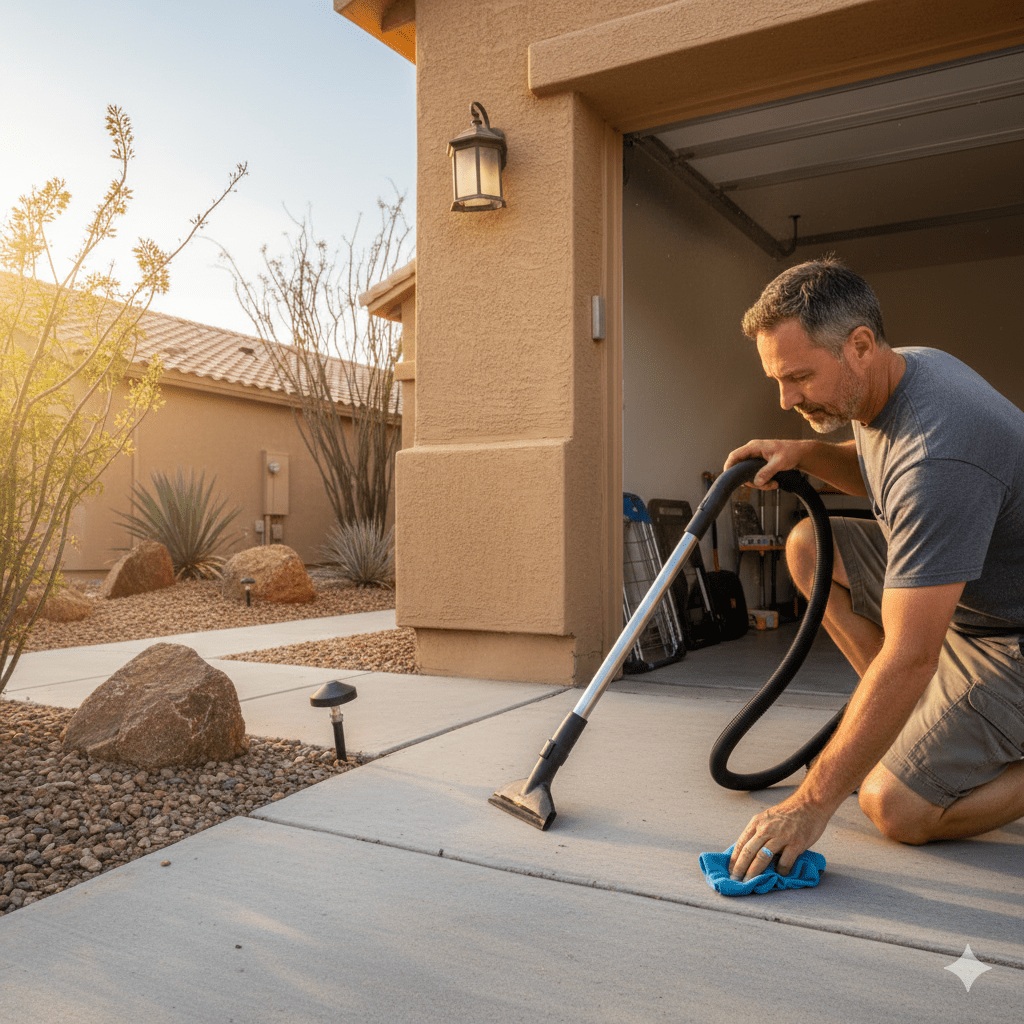
Clean the garage door tracks and photo‑eye sensors gently every month, use a silicone spray to lubricate rollers and hinges every six months, and install a bottom door sweep plus side seals to block blowing sand. If the door grinds, sticks, or the opener struggles, schedule professional servicing to clear rollers, hinges, and the torsion hardware. doors.org
Why desert dust and wind damage garage doors
Las Vegas winds carry very fine dust and sand that settles into track grooves, roller bearings, and sensor housings. That gritty buildup abrades metal, misaligns moving parts, and causes jerky movement or false sensor trips. Regular, gentle cleaning prevents accelerated wear and costly repairs. goodgollygarage.comMonthly checklist
Tools & supplies you’ll need
- Soft microfiber cloths or lint‑free wipes.
- Shop vacuum with crevice tool.
- Soft-bristled brush (small paintbrush or toothbrush).
- Silicone-based garage door lubricant spray (do not use WD‑40). homedepot.com
- Replacement bottom sweep and side seal (measure door width first).
- Safety glasses and flashlight.
Step 1 — Gently clean the tracks (monthly)
- Disconnect or disable the opener so the door won’t move while you work.
- Remove loose grit with the shop vacuum crevice tool. Use a soft brush to dislodge stuck sand.
- Wipe the track with a damp microfiber cloth. Do not use heavy solvents or pour oil into the groove. Heavy grease traps dust and becomes abrasive. homedepot.com
- Claim: Grit in tracks causes jerky movement.
- Evidence: Desert dust accelerates wear on rollers and tracks and can misalign the system. goodgollygarage.com
- Implication: Monthly vacuuming and wiping keeps motion smooth and prevents opener strain.
Step 2 — Wipe photo‑eye sensors and test safety reversal (monthly)
- Locate the two photo‑eyes at the base of the door tracks.
- Gently wipe each lens with a dry microfiber cloth. Avoid sprays that could leave residue.
- Perform the opener safety test: place an object in the door’s path and close. The door should reverse on contact. If it doesn’t, recheck alignment and lenses; call a pro if it still fails. doors.org
Step 3 — Install or inspect weather seals: bottom sweep and side seals
Why: A proper bottom sweep plus side seals stop wind‑driven sand and reduce dust entry. They also protect against heat. homedepot.com Quick install steps (overview):- Measure door width and existing groove.
- Choose a U‑shaped astragal or rubber bottom sweep sized for your door.
- Remove the old strip, clean the groove, and slide or screw the new sweep in place. Trim excess per instructions.
- Add foam or rubber side seals to vertical jambs where gaps exist.
Step 4 — Lubricate rollers, hinges, and springs (every 6 months)
Use a silicone‑based garage door lubricant. Apply sparingly to rollers (if metal), hinges, and opener chain/rail per manufacturer guidance. Do not use WD‑40—its solvent action strips protective oils. homedepot.com If rollers are nylon with sealed bearings, minimal lubrication is needed; replace rollers when worn. Tighten loose hardware as needed. homedepot.comWhen to call a professional (and what they do)
Call a pro if the door grinds, binds, or the opener struggles to lift. Professionals safely service torsion springs, remove compacted grit from rollers and hinges, and replace worn rollers or seals. They perform balance and force tests and will adjust photo‑eye alignment if needed. Annual or biannual professional tune-ups prevent emergency failures. doors.orgCommon problems, quick fixes, and troubleshooting
- Symptom: Door moves jerkily only at certain positions. Fix: Clean track zone where the jerk occurs; check for dents or obstructions. goodgollygarage.com
- Symptom: Door fails to reverse on objects. Fix: Clean photo‑eyes; check wiring and test again; if it still fails, call a pro. doors.org
- Symptom: Sand under the door after a windstorm. Fix: Inspect and probably replace the bottom sweep and add side seals; consider a temporary barrier (sandbag or threshold) during storm events. homedepot.com
Maintenance schedule
| Frequency | Task |
|---|---|
| Monthly | Vacuum tracks, wipe sensors, visual hardware check. doors.org |
| Every 6 months | Lubricate moving parts, tighten hardware. homedepot.com |
| Annually or as needed | Professional inspection and tune-up; replace worn rollers, seals, or springs. doors.org |
FAQ
How often should I clean my garage door tracks in the desert?
Monthly cleaning is recommended—desert dust accumulates quickly and is abrasive. doors.orgCan I use WD‑40 on my garage door parts?
No. Use a silicone-based lubricant instead. WD‑40 can remove protective oils and attract grit. homedepot.comWhat does a bottom door sweep do and how much does it cost to replace?
A bottom sweep seals the gap under the door to stop sand, water, and drafts. Costs vary by material and length—measure your door and compare U-shaped astragals or rubber sweeps. homedepot.comWhy does my garage door reverse unexpectedly after windstorms?
Grit on the photo‑eye lens or temporary misalignment from strong winds can cause false reversals. Clean lenses and test; call a pro if misalignment persists. goodgollygarage.comWhen should I call a pro for garage door maintenance?
Call a professional for grinding noises, torsion spring issues, or if the opener struggles—these are signs of hardware stress that can be dangerous. doors.orgSources and verification note
- International Door Association — Care & Maintenance. doors.org
- Home Depot — Garage door maintenance and weather seal guidance. homedepot.com
- LiftMaster — Photo‑eye sensor guidance. liftmaster.com
- Home Depot product page — silicone lubricant examples. homedepot.com
- Good Golly Garage Doors — desert dust effects and local tips. goodgollygarage.com
Monthly cleaning of tracks and sensors, a six‑month lubrication routine, and properly installed bottom and side seals are the fastest, lowest‑cost ways to keep desert sand from shortening your garage door’s life. Call a pro for grinding, torsion, or persistent alignment problems.