
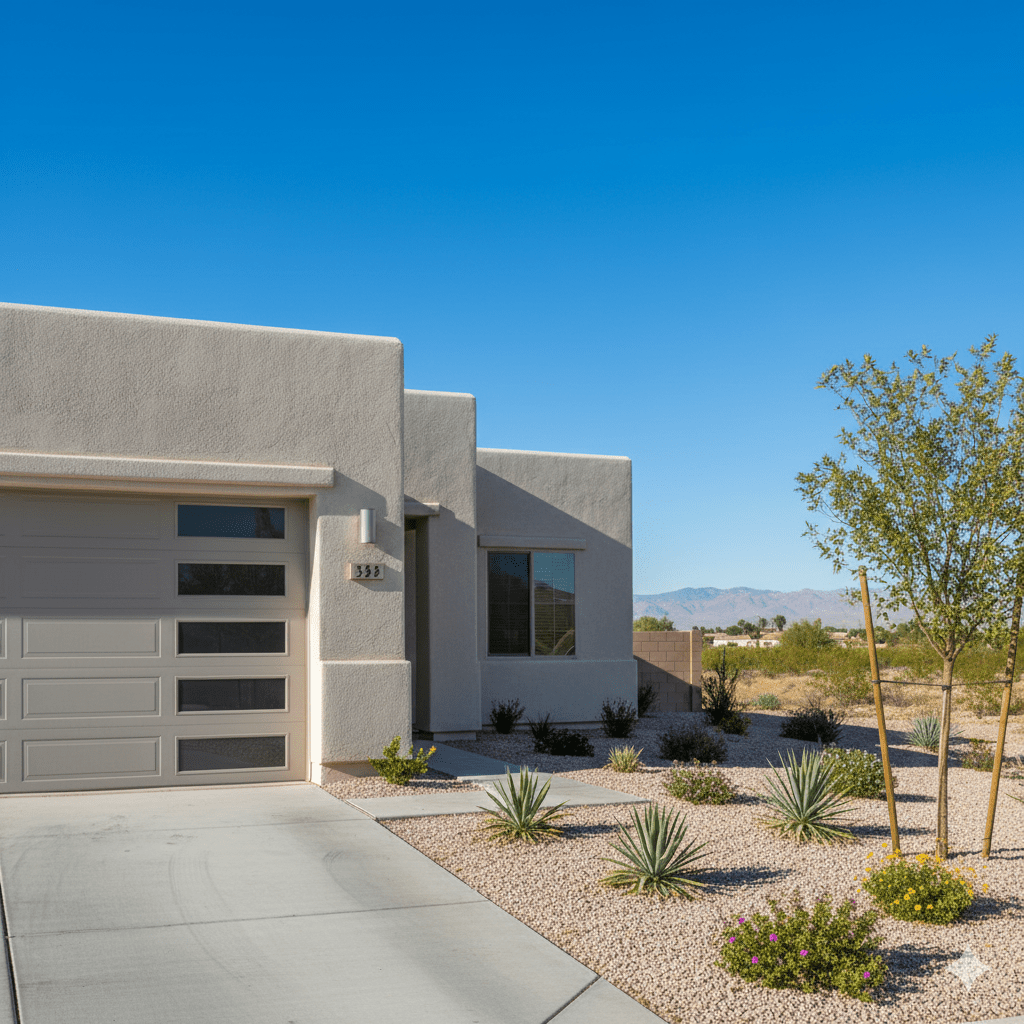
Updated: January 6, 2026 — Yes. In most Las Vegas master‑planned communities, including Summerlin and Green Valley Ranch, homeowners must get architectural approval before changing a garage door’s visible style or color. Associations enforce CC&Rs and may issue fines or record liens for violations. Follow the steps below to get approval and avoid fines. leg.state.nv.us
Quick answer: Plan, submit an ARC application with full specs and photos, use an HOA‑experienced installer, and maintain the door to avoid violation notices and fines.
Why this matters
The garage door is often the largest visible element on a home’s street face. Boards treat it as an aesthetic and property‑value issue. If you replace or repaint without approval, you risk a violation notice, fines, and even a lien. The fix is simple: plan, submit, and use contractors who understand HOA rules. leg.state.nv.usStep-by-step: How to replace or update your garage door without HOA trouble
Step 1 — Locate and read the governing documents (CC&Rs, Design Guidelines)
- Find the recorded CC&Rs and any Design Guidelines for your village or sub‑association.
- Look for sections titled “Exterior Alterations,” “Architectural Control,” or “Garage Doors.” Those sections define permitted styles, required colors, and submission rules. Many master associations post guidelines or a paint book online. Example: Green Valley Ranch provides an ARC form and a pre‑approved paint book. gvrhoa.com
- If you cannot find them, contact your HOA management company or use the state resource that explains CC&R enforcement under NRS Chapter 116. leg.state.nv.us
Step 2 — Identify the Architectural Review (ARC/ACC) process and timeline
- Find the ARC submission form and checklist. Typical required items: product spec sheet, manufacturer color code, elevation photo, and contractor credentials. scribd.com
- Note review timelines and any automatic‑approval clauses (some committees have a fixed review window; if they do not act, some documents provide for automatic approval after a set period).
- Ask whether temporary protective coverings or staging will trigger a violation and plan accordingly.
Step 3 — Match style, color, and material to approved palettes
- Use the HOA’s pre‑approved color book or palette when available. Many HOAs require the garage door to match the house body color or a specific approved color family. Green Valley Ranch provides a paint book with preapproved combinations. gvrhoa.com
- If your desired style or color is outside the palette, prepare a clear justification and photos showing compatibility.
- If you plan a modern door (full glass, frosted inserts, or nontraditional finishes), confirm whether the community allows it before you buy.
Step 4 — Prepare the application package (photos, specs, install plan)
- Provide: – The completed ARC form. – Manufacturer model/spec sheet and color codes. – Photographs of the existing door and the proposed door (render if possible). – Scope of work: who will install, timeline, and where equipment will be staged. – Proof of contractor licensing and insurance (recommended).
- Tip: Submit measured elevations or a simple drawing showing how the new door sits relative to the front façade.
- Keep a copy of the submission and delivery/read receipts from the HOA. Many ARCs require written approval before work starts. scribd.com
Step 5 — Use an HOA‑experienced installer and request proof of compliance
- Hire an installer who routinely works in Las Vegas master communities. These contractors understand common palette limits and submission expectations. Local garage‑door firms publish HOA guidance and often provide HOA‑friendly options. garagedoorrepairlasvegasnv5.com
- Ask the installer to provide: – Manufacturer labels and color swatch stickers. – Photos during install and after completion showing the door aligned and painted to spec. – Any leftover materials for HOA inspection.
- Provide the HOA with the installer’s proof of work and request sign‑off in writing.
Step 6 — Keep the door maintained to prevent violation letters
- Maintenance matters. Dents, peeling paint, missing hardware, or nonworking openers are common complaint triggers.
- Many HOAs issue violation notices for cosmetic neglect. Fix dents promptly, repaint with the approved color, and keep the mechanical parts functioning. Regular maintenance avoids enforcement actions and keeps curb appeal high. garagedoorrepairlasvegasnv5.com
Common HOA rules and traps in Summerlin & Green Valley Ranch
- Multiple governance layers: expect a master association plus village/sub‑association rules. You may need separate approvals. Summerlin’s development documents reference design review requirements for new work. scribd.com
- Preapproved colors do not remove the need to submit an application. Even the pre‑approved paint book often requires an ARC form before repainting. Green Valley Ranch uses a pre‑approved paint book but still requests ARC submission. gvrhoa.com
- Timing and automatic approvals: read your ARC timeline. Some communities automatically approve if the committee does not respond within a specified window; others require active sign‑off. scribd.com
Micro-story (humanized advice)
A homeowner ordered a modern carriage‑style door and painted it a deep accent color assuming it was close enough. The HOA issued a violation. We paused the install, submitted the specs, and chose the correct body color from the HOA book. The replacement took three extra weeks but avoided fines and a forced repaint. Planning up front saves money and stress.Sample pre‑work checklist (use before signing a contract)
- I found and read my CC&Rs and Design Guidelines. leg.state.nv.us
- I located the ARC form and confirmed submission requirements. scribd.com
- I selected a door model with documented color codes. garagedoorrepairlasvegasnv5.com
- My installer is licensed, insured, and familiar with local HOA rules. garagedoorrepairlasvegasnv5.com
- I will photograph the completed job and request written HOA sign‑off.
When you get a violation notice — what to do next
- Read the notice carefully. Note the cited CC&R section and the cure date.
- Gather documentation (photos, receipts, contractor statements).
- Request a hearing or appeal per the HOA procedure if you believe the notice is incorrect.
- If the violation is correct, schedule remediation promptly and inform the HOA in writing when complete. Use dispute templates and keep a written record of all communications. runhoa.com